By Gregory J. Palmerino
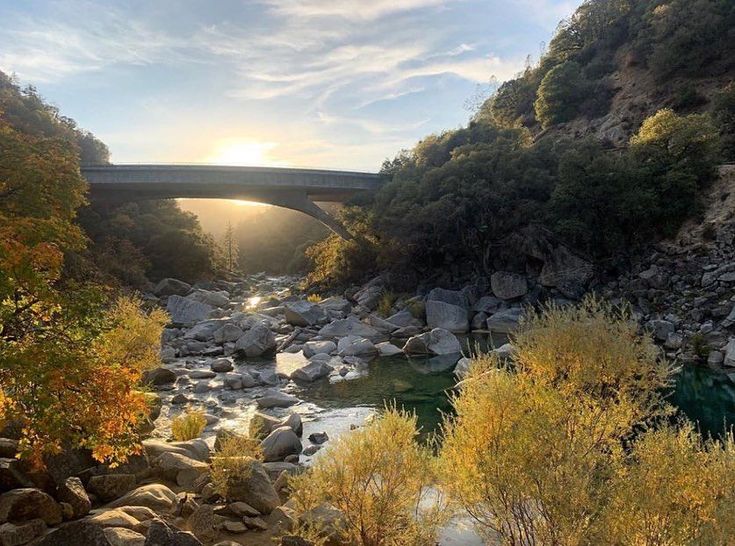
“Pans and hands only” the sign read. It was one of those yellow signs that mostly tell people what NOT to do— no fires, no camping, no unleashed pets. For the removal of gold however, the rule was very clear: pans and hands only. Here in an area of California referred to as Gold Country, along the Buttermilk Bend trail in the South Yuba River State Park I was ready to live my gold rush fantasy. I was ready to pan for gold.
This was not my first time panning for the metal, as a fourth grader growing up in California a large part of the curriculum is focused on the gold rush—in classic US educational system fashion I learned quite a bit about the excitement of the great migration, of the drama, of the riches to be made, the songs that had been sung and the golden state that would rise from the rush. What I learned very little of was the decimation of the indigenous communities and the environmental impacts that would come from this period of history.
Instead, my class took a field trip to Knott’s Berry Farm— a local western theme park where I arrived dressed in cowboy boots, hat, and bandana, and panned for gold for the very first time. As my pan swirled the sparkling water in the sunlit makeshift western town, I found flake after flake within the sentiment of the trough. Taking home nine glittering flakes of pure gold in a small glass vial stoppered with a cork I was as happy as any gold prospector of yesteryear. I imagine not even James W. Marshall himself—the man who discovered gold at Sutter’s Mill in 1848 and inadvertently set off the rush to California—could have been happier. The experience was thrilling.
I could already tell that this day 30 years later was not going to live up to the idealized memory of the theme park panning of my youth. For starters, the mist hung about me like a damp hug and my choice of wearing a wool sweater was less than appropriate for the weather. As I made my way down the steep riverbank from the trail the gathered water in the pine needles above, heavy with its own weight formed droplets that fell to the earth below. The sound of it a cadence to rival any new age drum circle and the feel of it soaking my clothes to my skin. Once at the river I set down my backpack and pulled out a shiny steel pan about a foot in diameter with three ridges around the bottom of the bowl and a wide flat rim. Even under the silver sky of a sunless day it gleamed in the light. Kneeling alongside the water I slipped the pan into the sediment below.
The Gold Rush was short and fast—from the years of 1848 to 1852 somewhere along the lines of 300,000 people came to California to do just this—stand in a river and pull out the gold. Swirling, tapping and lightly shaking the water and sediment in my pan I fell into an easy meditation, despite the icy water numbing my hands. I lasted about an hour in the wet weather, ankle deep in the South Yuba River—yielding no gold for all my efforts. Yet during this rush for gold billions of contemporary dollars’ worth of the metal were extracted in just this way. Gold flowed through California in the rivers, it was abundant in the ground. It must have been a staggering discovery to the early Americans that descended on this place.
As I climbed back out of the riverbed towards the trail, I thought about how beautiful it would have been had it been left in the ground. The glint and gleam in the water, the sparkle in the hills like so many suns. And yet, it was largely gone now—at least from the surface. As I got into my scratched up and worn in black hatchback and shook off some of the clinging wetness, I set the navigator in my smart phone to a very different type of extraction site—the Idaho Maryland Mine. A mine whose tunnels still hold veins of glittering gold.
“You will arrive at your destination in 27 minutes.”
The voice poured from my phone as it rattled about in the driver’s side cupholder as I wound my way down the mountain road and towards the forest lined streets of Grass Valley, California. As I drove, my mind wandered to the fact that my phone itself owes a little bit of its technological magic to the extraction of gold and other metals from our Earth. Each piece of contemporary technology—phones, tablets, televisions, spaceships— all require gold. My iPhone 7 relied on the harmony of 0.00034 grams of platinum, 16 grams of copper, 0.35 grams of silver and of course, 0.034 grams of gold coming together to create that navigation voice guiding me to my next destination.
“In one mile, take the next exit for Brunswick Road,” the voice in my phone demanded.
My parents had relocated to Grass Valley eight years prior, just after having retired and I had been visiting the area ever since. My mom had always wanted what she called a “long view” having lived in suburban Southern California her entire life and my father had found her just that in their Grass Valley home. The back wall of which was all windows showcasing a vista that was nothing but trees and mountains and sky. A view that concealed the hundreds of miles of mineshafts below. My grandmother was less enthusiastic about the move to Gold Country.
“I don’t know why you’d want to live around all these trees,” my 90-year-old grandma would say. She had grown up in rural Minnesota during the Great Depression and made the front page of her local newspaper when she eloped to Hollywood in 1939. Grandma had given up the forest for the city long ago and never had quite the same appreciation for the beauty of the foothill forests. Brunswick Road is the exit I would have taken to visit her if she was still alive. The same exit I was taking to get to the entrance of the Idaho Maryland mine, a goldmine that Rise Gold Corp. under the mantle of Rise Grass Valley is attempting to reopen. A mine that my navigator was telling me was three minutes away.
“Rise Grass Valley will reinitiate mining and will do so with a focus on green-friendly practices and minimizing the impacts to neighbors,” states the Rise Grass Valley website. “The project will use modern, clean, state of the art mining equipment and proven techniques to produce ‘green gold.’ Every effort will be taken to mitigate aesthetics, light, noise, vibration, and traffic impacts. When in full operation, Rise Grass Valley’s Idaho-Maryland Mine Project will create hundreds of good-paying jobs and realize broad economic benefits for Nevada County.”
Green Gold? Living wages? State of the art equipment? It sounds like a dream, and perhaps, given the track record of Benjamin Mossman, the current CEO of Rise Gold Corp., that is all that it is. In the extensive coverage of the saga of the Idaho Maryland mine nobody has summed Mossman up better than Denise Bellas. A Grass Valley resident, Bellas wrote an editorial featured in the May 16, 2020, issue of the local paper The Union:
“I found information on one of Mr. Mossman’s recent past projects, Banks Island Gold Limited in Canada. As president and CEO, Mr. Mossman created a company that ended in bankruptcy, was charged with many environmental violations, and had their $420,000 security bond confiscated by the Ministry of Energy and Mines to clean the polluted site. According to the Government of Canada’s website, “on July 13, 2018, Mossman was found guilty of one violation of the Fisheries Act ($7,500) and one violation of the Provincial Environmental Management Act ($7,500).”
I was so upset that we are even considering a company run by this person. I personally believe, based on his past actions, I do not trust that he is a person of integrity. I do not believe that he will act in an ethical way. I do not believe he will value the preservation of our community and our environment over maximizing profits.”
And the mine was very much in the center of the community. Brunswick Road cuts through shopping centers that could be in any neighborhood in California—Grocery stores, pharmacies, restaurants— all surrounded by residential properties from apartment complexes to assisted living homes.
“You have arrived at your destination,” the metals in my phone announced.
The grayish green buildings are utilitarian in their aluminum siding and sheer functionality. Outwardly they would never betray the entrance to the goldmine below. It was all much smaller than I imagined, a few buildings scattered on a hill among the trees and yet below ground the tunnels of the mine twist and turn around over 2,500 acres of Grass Valley. If allowed to reopen, Rise Grass Valley would be running a mining operation here 24 hours a day, 7 days a week.
In the year 1938 the Idaho Maryland mine was the second largest gold mine in the United States and in the first two years of the 40s production averaged 121,000oz of gold per year. At today’s price of $1,806.47 an ounce that would be $218,582,870 worth. In 1942 however the mine was closed, largely due to the United States entering World War II. After the war, there was a global cap on the price of gold set at $34 an ounce. For that reason, along with the fact that left unattended the mineshafts had flooded with water, Idaho Maryland mine was abandoned for decades. In that time, the community of Grass Valley expanded, thriving on the Gold Rush based tourism—history, Cornish pasties and Victorian Christmas all set in the picturesque forests that harken back to a nostalgic time of miners and the wild west. The mine changed hands multiple times in its history, most recently being held by the EmGold Corporation who, after unsuccessfully attempting to reopen the mine sold it to Rise Gold Corp in 2018.
Driving away from the site I needed no navigator; I know these streets. The metals in my phone rested silently in my lap as I retraced my path down Brunswick Road and back onto highway 49, my next destination historic downtown Nevada City. Exiting Broad Street, the familiar sights of rusted mining equipment, wooden buildings and redwood trees greeted me as I parked my car and fed the meter.
The wooden planks of a hundred-year-old boardwalk clicked and clacked beneath my boots as I walked towards the rusted old mining equipment on display in front of the chamber of commerce. Once functional, now serving functionally as art grounding Nevada City in its history. I was walking to a global import gallery I frequent when I find myself in this part of town that sells exotic art, jewelry, and textiles from around the world located in a corner storefront dating back to the founding of the city in 1849. In both of their windows hangs the same caution tape yellow and black sign:
“Protect our Air – Water – Way of Life – NO MINE.” It is a sign that hangs in half of the shop windows up and down the streets of downtown. It is stuck into neighborhood lawns and plastered to the sides of telephone poles across Gold Country.
The wood and glass door of the shop creaked as I opened it, the smells of eastern oils and burning Paulo Santo wood twisted into my nostrils as I closed the door behind me. The floorboards groaned beneath my feet alerting one of the owners behind the counter of my presence. He smiled at me, his phone on his ear as he finished up a conversation, his eyes welcoming me inside as I browsed the rings of gold and silver.
“A customer just came in, I should probably go,” he said to the person on the other end of his phone.
Jaga looks how you would expect a man to look that has dedicated his life to exploring the cultures of the world. In a way, he is timeless—a merchant of old with his long hair and beard, his hands and ears ringed, his clothes an eclectic blend of East and West. I had been in this shop many times before and he knows me, my family and all our former purchases. Today I have a different motivation—today I’m curious about his signs.
“What, aside from the obvious?” Jaga says when I ask him about it. “The air, the water—the noise? The trucks, the whole operation going all day every day? I mean, it is the whole thing isn’t it. It would be one thing if it was just a mine but it’s also that guy, you know? Mossman. Not the best reputation there.”
I agreed with him, that I had read about Mossman’s reputation and found him to be an untrustworthy character based on his track record. Jaga lowered his voice then, even though we were alone in his shop.
“I wouldn’t say this to just anyone but it’s a cultural thing too, you know.”
“How do you mean?” I asked.
“Look, we are already experiencing gentrification around here—to bring in those types of people right now? Things are already changing, it’s a delicate balance.”
“Who are those types of people?” I asked.
“Let’s just put it this way—if you want to find people in support of the mine, I think you could find them at a Trump rally.”
“How do you reconcile this community’s history of gold and gold mining while being opposed to the reopening of an active one?” I asked.
“Look, plantations in the South are beautiful. Historic homes built a long time ago and they were built on slavery. We can appreciate them today while at the same time condemning their past. Condemning the slavery that built them. We can appreciate what was built here by gold and mining and condemn those same practices today.”
Just then the door creaked open, and a trio of women entered the shop. I thanked Jaga and continued to browse for a few more moments, lingering over a case of gold jewelry that I had been coveting imported from India. Jewelry made with gold mined far away from the hills of California.
A few days later the Thanksgiving holiday brought with it warm weather and golden leaves and on that Saturday, I decided to head to one of the original businesses established in Grass Valley—Stucki Jewelers Inc. Established in 1904, Stucki Jewelers has been creating jewelry out of California gold for over a century. Today they are perhaps best known for their annual after Thanksgiving sale—if it snows one inch at the Nevada City airport on Christmas Day, they will refund your entire purchase. The lure of potentially free gold (last year they paid back $85,000 after a winter storm dropped well over an inch of snow) led me to Stucki to try on a few of the glittering rings I could not afford.
The woman who helped me was a warm, grandmotherly type. Her blonde tinted hair was swept up into a once fashionable hairstyle and her emerald eyes did not betray what she must have been thinking—that we both knew I wasn’t going to buy the $2700 ring that was on my finger. It was a heavy thing, made for a man with hands much bigger than my own.
“These stones are my favorite,” I said dreamily to myself as much as the saleswoman.
“The natural quartz with a vein of gold, classically beautiful. You know it’s all local.”
“Really?” I said.
“Oh yes, they take the gold right out of the Argonaut Mine just over the mountains there,” she stated, pointing straight out of the door.
“How interesting,” I replied, glancing back down at the ring.
“You can even tour the mine if you like, on account of it being in the natural reserve.”
“What?” I said looking up. “There is an active mine in a natural reserve?”
“Mmhmm,” she said.
“And I could tour the mine? Like next week?”
“Well, probably not this time of year due to the flooding. But if you call and make a reservation in the summer, you can certainly tour it.”
“Thanks for the tip,” I said handing the ring back, my hand instantly lighter. “So…I have to ask. You work here at a jeweler; how do you feel about the potential reopening of the Idaho Maryland Mine?”
“Nope, not for it,” she said, her face screwed up as if she had just smelled a plume of exhaust. “I’m against it. Our air, our water is way too important.”
“Really?” I said, “Even though you sell gold for a living?”
“Well, there is plenty of gold out there, it doesn’t have to come from my backyard. I live off a well. I rely on clean water.”
That was the primary issue with almost every person who would share their opinion with me—water. Nobody wanted their water tainted with the outpouring of byproducts and potential environmental disasters that could ensue. Yet here this woman was, selling new creations of recently extracted gold from a mine in a natural reserve. Did the fear of the contamination only stop the desire for this glittering metal if it was in her backyard? Clearly it did.
A few days later I was in the car leaving my parent’s home as I set my navigator to another gold mine in the area—the Empire Mine. After over 100 years of operation and extracting more than 5.8 million ounces of gold the Empire Mine closed in 1956. The Empire Mine is now a national park containing both the former owner’s home and gardens as well as the entrance to the mine itself. A hole in the Earth that led to the 367 miles of mineshafts below.
“You will arrive at your destination in 9 minutes,” the metallic voice chimed out of my phone.
I was meeting Bryan, a 48-year-old Grass Valley resident who like many in this community relies exclusively on the well water pumped directly from the ground. He relocated to Gold Country from San Francisco to help take care of his mother who lives in a property off the city’s main grid. We had met for a hike but when I found out we could explore the historic grounds I paid the $5 entrance fee for the two of us. Bryan and I explored the historic site but he was largely quiet as I took photos of the trees, now fully in their fiery displays of Fall raining golden leaves around us as we walked. I stopped to take a picture of one of the fountains in the gardens outside of the Empire mine estate house and saw Bryan scowl.
“What?” I asked.
Brow furrowed he uttered, “Yeah all this is beautiful, I mean—that house is objectively beautiful, these fountains of clean water—beautiful. All it does though is distract from what this place really was, really is. I have no love of mines and what they did to the land here. What they could do to my land now.”
Bryan went quiet again as we looked at the mine shaft and the old, rusted equipment. Finally, he spoke, “Come on, lets hike one of the trails I want to show you something.”
The air was cold but not cutting as we hiked the trails of Empire Mine. It was midweek and the only other person we saw was a Lycra clad retiree on a mountain bike zipping past us down the trails. The forest around us painted in the colors of changing fall leaves and evergreen pines.
“Here, take a look at this, make sure you get a picture of this,” Bryan said, pointing to a chain link fence in the middle of the trees blocking off a substantial area of the park. Attached was a red and white sign that read:
“CLOSED AREA: Areas within the fenced boundaries contain historic mine and mine related materials. WARNING – These areas may contain certain naturally-occurring minerals (lead, arsenic, mercury, etc) known to the state of California to cause cancer or birth defects or other reproductive harm. Potential exposure could occur by breathing or ingesting these materials if park visitors fail to follow simple safety guidelines. Public access to this area is currently restricted to keep the park visitors safe until further studies and any necessary environmental cleanup measures are conducted in restricted area.”
“This. This is what the Empire mine did, what the Idaho Maryland mine did over there off Brunswick. What reopening it could do.” Brian said. “Lead, arsenic, mercury. This area is still off limits because it is still toxic with the waste from when the mine closed in the 1950s. They say that it’ll be different this time, but I think they’d say anything to get what they want. Besides, all it takes is one accident, and they’re called accidents for a reason.”
And that is just it—the extraction of these metals and minerals that we rely on for our jewelry, our electronics, our way of life is deeply harmful to the earth and always has been. Contemporary mining practices may be less toxic or harmful, but they still have an ongoing impact to our planet. A planet whose climate is rapidly changing. Nobody that I spoke to in Grass Valley or Nevada City was willing to go on record in support of the mine but plenty of people were outspoken against it—all expressing fear of the degradation of their air, their water, their way of life. Yet the gold is still in their pockets, around their necks, on their walls—and all that gold must come from somewhere.
It was the scorching heat of summer and I, like many of the residents of Gold Country had made my way to the Yuba River. The waters of the Yuba are said to be the clearest in all of California and I was spending the day chasing fish to the depths and back. One can lose themselves in the baptism of these waters—become timeless in this place. For here the Earth is as she was intended to be—endlessly blue, then green, then blue again and filled with the chorus of creation.
Yes, a staggering and ancient beauty.
Yet on this day, back in the summer of 2022, as on many days in July and August that reach triple digit temperatures there was an undercurrent of anxiety among the bathers in the Yuba. One hears it in the clips of conversations that speak of fire weather and evacuations. One feels it in the silence that falls when the thump of helicopter blades are heard overhead— all eyes turning toward the sky in unison. One smells it in the smoke that hangs in the air. Not even the bliss of the river can wash away the reality of droughts and fires—a constant threat to this community.
Yes, California is changing like the rest of our warming world and Gold Country has felt the shift. Droughts have left the land parched, water levels low and wells nearly tapped out. Even along the riverbed the charred, skeletal remains of burnt forest are present reminders of last year’s fires looming above the banks of the river. A river whose level seems to be lower and lower each year.
The air, the water, the way of life here in Gold Country and around the word has been feeling the combined effects of our human impact. Mines, deforestation, burning fossil fuels, polluting our waterways… it is all happening around the globe. No, I do not wish to see a mine reopen in my backyard—not in Grass Valley. Yet as I set the navigator on my phone and the platinum, copper, silver, and gold work their magic to take me to my next destination I wonder if not here, where? For as the world gets smaller and smaller the whole planet begins to feel like my backyard.
 Gregory J. Palmerino